 Sat 16 Jan, 11:30am
Supersonic
Inside Concorde
Engineering · Physics
Manchester Airport
£50 teen place


 New dates coming
Foraging
Biology · History
 Coming soon
Take a picture of a galaxy
Astronomy · Physics
Pillars of Creation, Webb telescope
Educational experiences for teenagers, led by specialists.
Image: NASA, ESA, CSA, STScI; J. DePasquale, A. Koekemoer, A. Pagan (STScI)
 Led by AstroVentures
Astronomy experience·Wark on Tyne, Northumberland
Sat 9 Jan, 5:30pm · 2 hours · Ages 10 to 18
People who know it first-hand
Every session is run by someone glad to let teenagers into their world.
School subjects come alive
Each experience connects to subjects they study at school, like physics or biology, so they see how things work in real life.
Built around teenagers
Every session is designed for ages 10 to 18. They take part and ask their own questions.
You come too
A parent, or another adult you choose, comes along at a reduced price. One adult can bring more than one teenager.
Sat 16 Jan, 11:30amInside Concorde
Engineering · Physics
Manchester Airport
£50 teen place
 Wed 17 Feb, 10:00am
Inside a crime scene investigation
Forensic science · Biology · Chemistry · Physics
Shelley, near Huddersfield
£70 teen place
New dates comingForaging
Biology · History
Coming soonTake a picture of a galaxy
Astronomy · Physics
 New dates coming
Surviving without anything
A practical astronomy experience for teenagers at Battlesteads Observatory in Northumberland.
A star is too far away to touch. Its light still carries clues.
At Battlesteads Observatory, teenagers investigate space with AstroVentures' astronomers. They split light into colours, explore telescopes, make an angle-measuring instrument and examine real meteorites, with their parent alongside them. The indoor programme runs on cloudy evenings; observing outside depends on conditions.
From holding a rock that has travelled through space to discovering the secrets carried in starlight, teenagers get closer to a universe that can feel impossibly far away. Alongside AstroVentures’ astronomers, they explore the night sky and the extraordinary things its light reveals. There is room for the questions they have always wanted to ask—and discoveries they would never have thought to look for.
Find your way around the sky. Explore constellations and star-hopping, and use astronomy resources to plan where and when to look for planets. Apply this outdoors when the sky allows.
Investigate starlight. Split light into colours with diffraction glasses and glowing gas tubes. Compare spectra, the patterns in that light, and explore what they reveal about stars.
Get hands-on with telescopes. Explore different designs, how they are adjusted and why astronomers choose different instruments for different objects. Use telescopes and binoculars outside when conditions allow.
Make and use a clinometer, a simple tool for measuring angles. Measure objects around the observatory and use the angles to calculate heights with guidance. In suitable skies, measure the angles of bright stars above the horizon.
Handle real meteorites. Examine specimens from AstroVentures' collection and explore what their structure can tell you about where they came from.
Light from towns and cities means much of the UK never gets properly dark. Northumberland does. Its International Dark Sky Park holds gold status, the highest award for a night sky, and was the first in England. That is why an observatory with a roof that opens to the whole sky stands here. The evening runs whatever the weather, and a clear night here is a bonus worth travelling for.
Light, colour and telescope optics bring physics into view. Building a clinometer turns angles and geometry into a measurement you can make, while finding your way around the sky connects astronomy with navigation and geography.
For a teenager considering where those interests might lead, the evening offers a first look at some of the methods used in astronomy and astrophysics, and time with people who share space science with the public.
What this is really
The light reaches us. The question is what it tells us.
From patterns in light to the angle of a star above the horizon, astronomy begins with things you can observe and measure.

AstroVentures
Venue: Battlesteads Dark Sky Observatory, Wark on Tyne, Northumberland
AstroVentures runs astronomy experiences at Battlesteads Observatory. Roy Alexander, who developed this programme, is a planetary physicist and the observatory's founding director. His background includes physics teaching, astronomy outreach and a master's degree focused on inclusive education. The session is delivered by the AstroVentures astronomy team.
Why this is on Foxchaser: An observatory with real equipment and a practical programme developed for teenagers, with indoor investigations as well as observing when the skies allow.
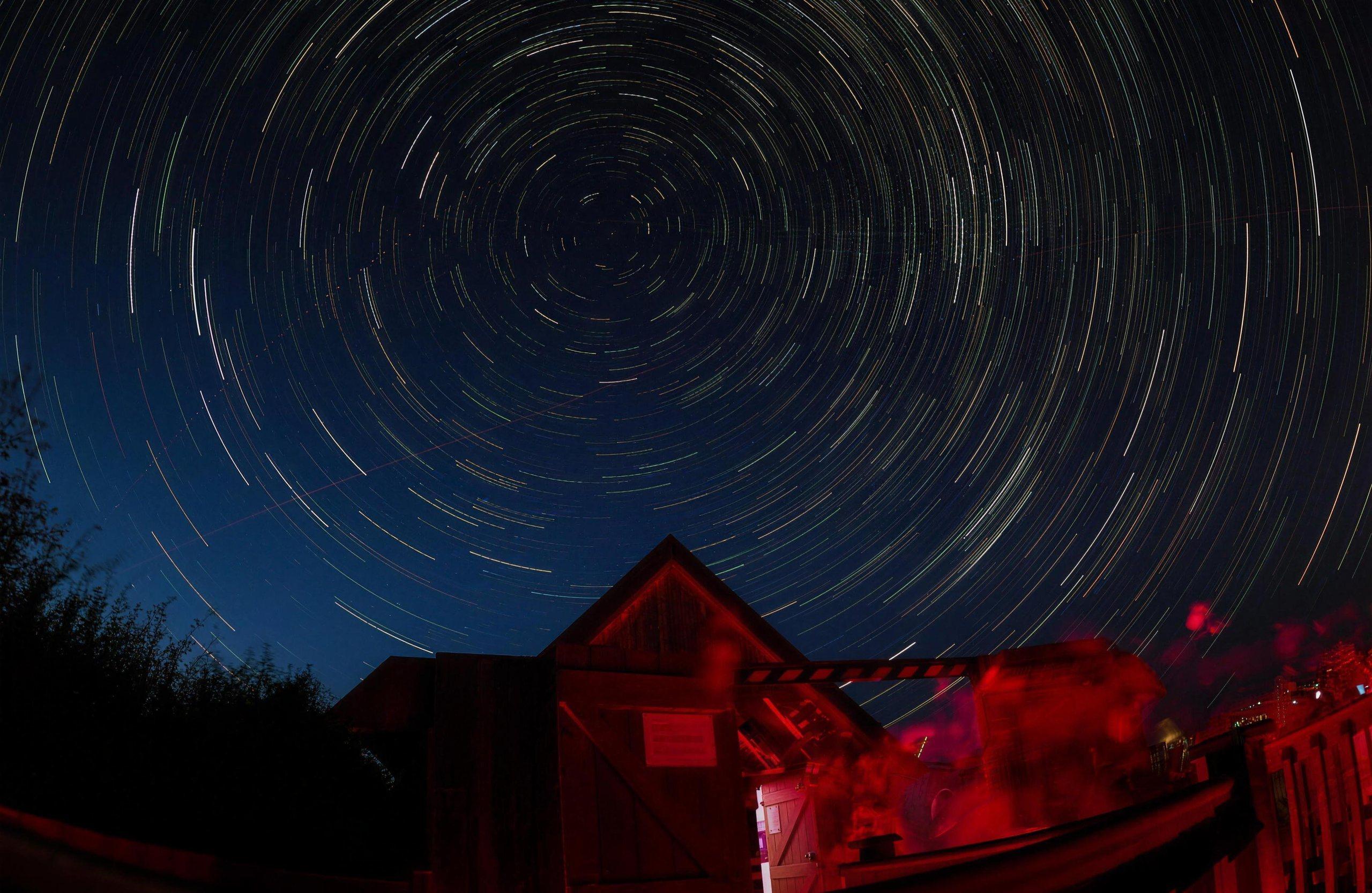
The first picture is the Pillars of Creation, taken by the James Webb Space Telescope (NASA, ESA, CSA, STScI). The other photographs are from AstroVentures. They show the observatory and astronomy imagery, not a previous Foxchaser session, and are not a guide to the view on the night.
Roy and Rita are part of the AstroVentures team. The astronomer leading this session will be confirmed before you go.
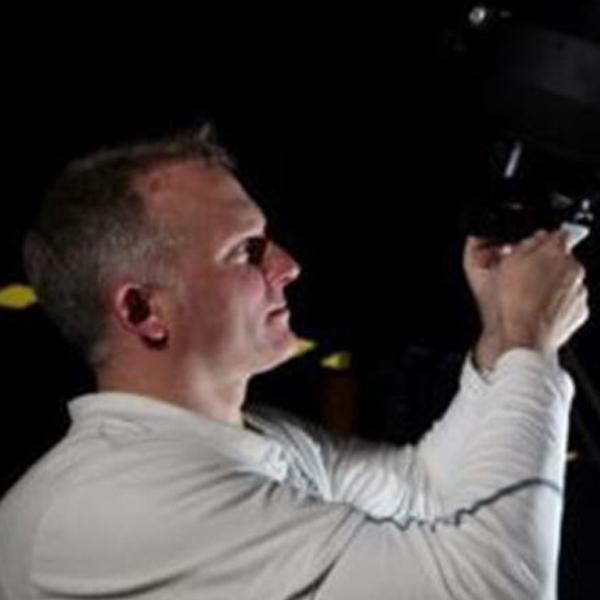
Planetary physicist, astronomer and founding director of Battlesteads Observatory
AstroVentures
Planetary physicist, astronomer and founding director of Battlesteads Observatory
Roy has been observing the sky since childhood and teaching physics since 1995. He has led observatory education programmes, co-founded the Northumberland Dark Sky Festival and chairs Dark Sky UK.
His master's degree in education focused on inclusive practice. He developed this practical programme for Foxchaser, combining light, instruments, measurement and objects from space.

AstroVentures director and lead astronomer
AstroVentures
AstroVentures director and lead astronomer
Rita leads astronomy events with AstroVentures and is a Fellow of the Royal Astronomical Society. Her particular interests include how stars evolve, colliding galaxies and planets beyond our Solar System.
She is studying Astronomy and Planetary Science with the Open University, with graduation planned for 2027.
The session still runs. AstroVentures has an indoor programme covering light, telescopes, meteorites and practical measurement. The astronomer takes the group outside to observe when conditions allow.
Explore sky navigation, investigate light with diffraction glasses and gas tubes, get hands-on with telescopes, make and use a clinometer, and handle meteorites. The astronomer adapts the activities to the group and conditions.
Outdoor observing depends on the weather and what is visible at the time. The astronomer chooses suitable targets on the evening. No particular celestial object or view is guaranteed.
Yes. A parent, or another responsible adult you choose, stays for the session and supervises the teenagers in their booking. One adult may accompany more than one teenager.
This is a practical astronomy evening centred on light, instruments, measurement and meteorites. Taking and processing an astronomical photograph is not a promised part of the programme.
Light and telescope optics connect to physics, the clinometer uses angles and geometry, and sky navigation connects astronomy with geography. The practical activities give these ideas a setting beyond a textbook.
We run this regularly. Would you like to stay updated when the next one comes up near you?
